

Quick Answer
Early satiety means feeling full soon after you start eating, or feeling uncomfortably full after a small amount of food. Common causes include functional dyspepsia (ongoing indigestion), delayed stomach emptying (gastroparesis), and certain medicines, including GLP-1 medications. Peptic ulcers and H. pylori can also cause it. Sluggish digestion may play a role too. Smaller meals, eating slowly and chewing well can help. See a doctor if it lasts. Get care right away if you also have unexplained weight loss, frequent vomiting, black stools, trouble swallowing or severe abdominal pain.
A Nutritionist's Take
"I'll be honest: early satiety isn't something I've worked with a lot. In my experience, it can be connected to low stomach acid and sluggish digestion. When digestion is weak, that full feeling tends to show up much faster. It's also become far more common with the rise of GLP-1 medications, which many people find make them feel full very quickly. If it sticks around, get it checked out, because there are a number of causes worth ruling out."
— Jordan Dorn, Certified Nutritionist
Feeling full after just a few bites can be frustrating, especially when it keeps happening. It can make it hard to eat enough. Here's what early satiety is, the most common causes, practical ways to support digestion, and when to see a doctor.
In this article 6 sections
What Is Early Satiety?

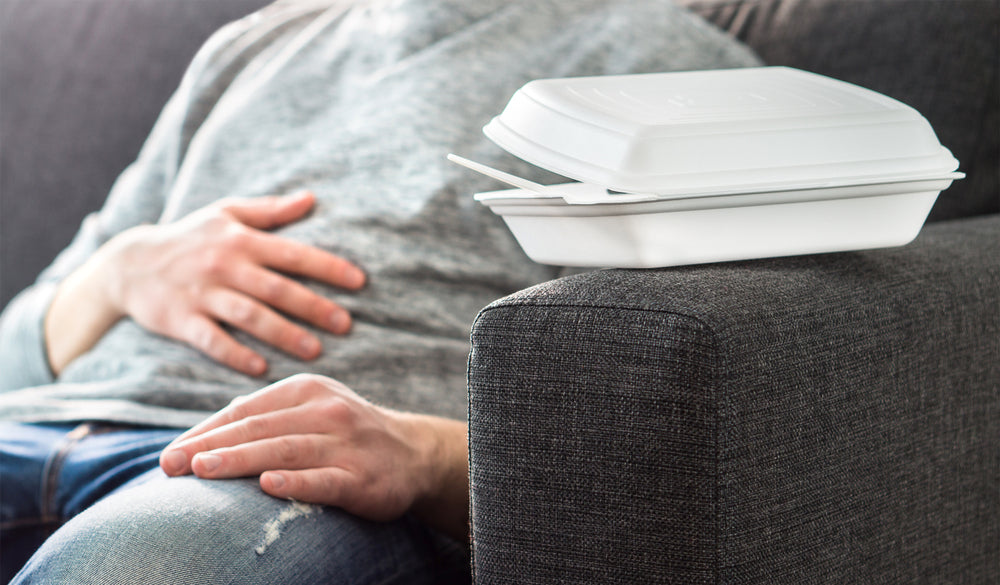
Early satiety means feeling full too soon while eating, or feeling uncomfortably full after a small amount of food. It often comes with bloating, upper abdominal discomfort, belching or nausea [1]. It's a symptom, not a diagnosis, so the goal is to figure out what's behind it.
Common Causes
Functional Dyspepsia
Most long-lasting indigestion is diagnosed as functional dyspepsia. Doctors describe it as a disorder of how the gut and brain interact. Possible contributors include trouble with the stomach relaxing and expanding after a meal, sensitivity to stomach acid, certain foods and drinks, and anxiety or depression [1].
Delayed Stomach Emptying (Gastroparesis)
With gastroparesis, food stays in the stomach longer than it should. Symptoms can include feeling full soon after starting a meal, feeling full long after eating, nausea, vomiting, bloating and poor appetite. Diabetes is the most common known cause, but in most cases no cause is found [2].
Medicines, Including GLP-1 Medications
Several medicines can cause indigestion symptoms, including GLP-1 receptor agonists, some antibiotics, NSAIDs, iron supplements and corticosteroids [1]. Feeling full quickly is an expected effect of GLP-1 medications for many people. If it's uncomfortable or you're struggling to eat enough, talk with your prescriber.
Ulcers and H. pylori
Peptic ulcers and H. pylori infection can cause upper abdominal discomfort and fullness [1]. These need a medical diagnosis and treatment. Learn more in our guide to foods that support stomach health with H. pylori.
Sluggish Digestion
Many practitioners also connect early fullness to sluggish digestion, including low stomach acid. Research on this link is limited, but eating habits that support digestion are worth trying either way.
Tips to Support Digestion
Eat smaller, more frequent meals instead of a few large ones.
Slow down and chew thoroughly. Digestion starts in the mouth.
Eat in a relaxed state. Avoid eating on the go or while stressed.
Notice your triggers. Very fatty, fried or heavily processed meals, carbonated drinks and alcohol bother some people.
Try bitter foods before meals. Arugula, dandelion greens and radicchio have long been used in herbal traditions to support digestion. See our guide to bitter herbs.
Sip digestive teas like ginger, fennel or peppermint after meals.
Don't lie down right after eating. Give yourself a few hours before bed.
Supplements That Support Digestion
Our Digestive Enzyme Complex provides a broad spectrum of 14 plant-based enzymes, including amylase, protease and lipase. Take it with meals to support the digestion of proteins, fats and carbohydrates.† Our Mastic Gum Complex, made from resin from the Greek island of Chios, supports stomach lining health and occasional upper GI comfort.† And our Multi-Strain Probiotic provides 30 billion CFUs to support a balanced gut microbiome.†
What Customers Report
As of October 2026, our Digestive Enzyme Complex has 101 customer reviews averaging 4.88 out of 5: 92 five-star, 6 four-star and 3 three-star. More than half of reviewers mention digestion, and about a quarter mention bloating. The three-star reviews mostly said it was too early to tell after a week or so. Results vary.
When to See a Doctor
See a doctor if early fullness doesn't improve. Get care right away if it comes with any of these [1]:
Unexplained weight loss or loss of appetite
Frequent vomiting, or vomit with blood
Black, tarry stools
Difficulty or pain when swallowing
Severe, constant abdominal pain, or long-lasting bloating or swelling
Yellowing of the eyes or skin
Chest, jaw, neck or arm pain, or shortness of breath
The Bottom Line
Early satiety has many possible causes. Common ones are functional dyspepsia, slow stomach emptying and medicines like GLP-1s. Smaller meals, slow eating, bitter foods and digestive support can help many people feel more comfortable. If it persists or comes with any red-flag symptoms, see a doctor to find the cause.
References
National Institute of Diabetes and Digestive and Kidney Diseases. Symptoms & Causes of Indigestion. niddk.nih.gov
National Institute of Diabetes and Digestive and Kidney Diseases. Symptoms & Causes of Gastroparesis. niddk.nih.gov
