

Quick Answer
Guava leaves come from the tropical guava tree and are rich in antioxidants like quercetin, gallic acid and catechin, along with minerals including zinc, magnesium and calcium. Traditionally they're brewed as a tea, and early research has looked at their role in antioxidant protection and healthy blood sugar. When the leaves are extracted, they become a whole-food source of plant-based zinc that comes with the minerals and cofactors found naturally alongside it. That makes guava leaf a gentle option for people, especially plant-based eaters, who want zinc without taking high-dose zinc isolate every day.
A Nutritionist's Take
"I absolutely love guava leaf as a whole-food zinc source, especially for people on a plant-based diet. You won't get as high a dose as you would from oysters or a zinc isolate, but you get zinc in a natural balance with copper, magnesium and calcium, the way whole foods provide it. It doesn't throw off your copper the way taking high-dose zinc isolate every day can."
— Jordan Dorn, Certified Nutritionist
Most people know guava as a sweet tropical fruit. Fewer know that the leaves of the guava tree have a long history of their own, brewed as a tea in tropical regions for generations. Today, guava leaf has become one of my favorite whole-food sources of zinc.
In this article, I'll cover what's in guava leaves, why I like plant-based zinc over high-dose zinc isolate for everyday use, what the research says about guava leaf, and how to use it.
In this article 8 sections
What's in Guava Leaves?

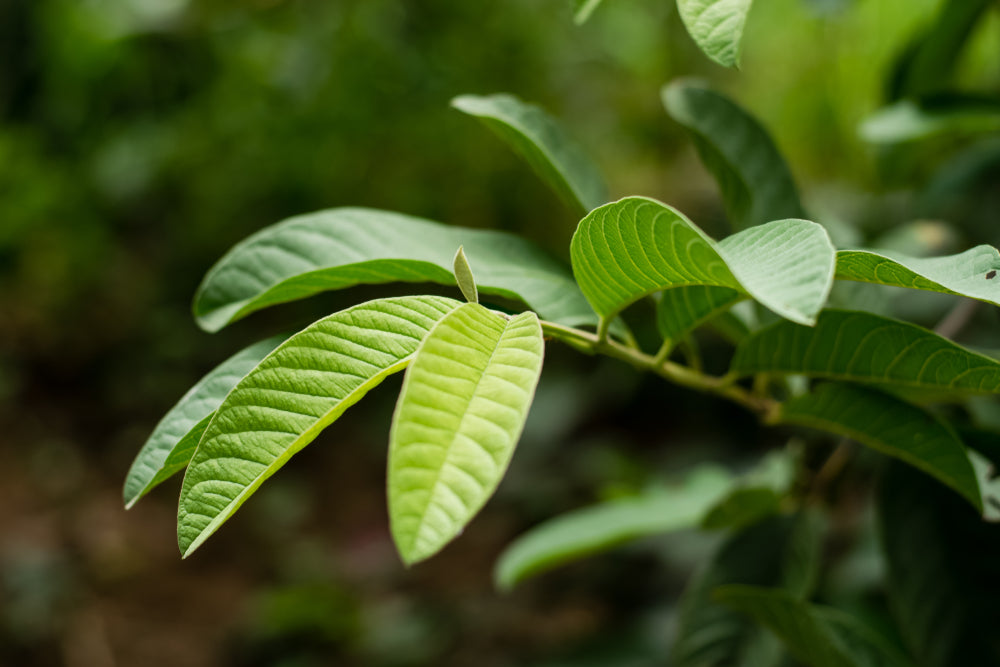
Guava leaves (from Psidium guajava) are packed with plant compounds. Quercetin is the major polyphenol, along with gallic acid, catechin and other flavonoids [1]. The leaves also contain minerals, including zinc, magnesium, calcium and phosphorus [1][2], plus naturally occurring plant sterols like beta-sitosterol.
That combination is what makes guava leaf interesting to me. It's not just one isolated nutrient. It's a full spectrum of minerals and cofactors, the way nature packages them.
Why Zinc Matters
Zinc is an essential mineral your body can't store, so you need some every day. It plays a role in immune function, wound healing, making proteins and DNA, and your senses of taste and smell. Adults need about 8 mg (women) to 11 mg (men) a day [3].
Oysters are the richest food source by far, followed by meat, seafood and poultry [3]. That's why people on a plant-based diet often come up short. Beans and grains contain phytates that reduce zinc absorption, so vegetarians and vegans may need more zinc than people who eat meat [3].
Whole-Food Zinc vs. Zinc Isolate

I want to be honest here: a guava leaf extract won't give you as high a dose of zinc as oysters or a zinc isolate supplement. But for everyday use, I think that's a feature, not a flaw.
Minerals come in balance. In whole foods, minerals travel together. Zinc comes alongside copper, magnesium and calcium. Taking a high dose of isolated zinc every day, especially long term, can lower your copper levels [3]. A whole-food source keeps those ratios closer to what nature intended. More on this in our guide to the calcium, magnesium and zinc ratio and our list of copper food sources.
It's gentler. Too much zinc can cause nausea, upset stomach and headaches [3]. A moderate, whole-food dose is far less likely to cause those problems.
It comes with cofactors. Guava leaf naturally contains plant compounds like beta-sitosterol and antioxidants. In my experience, getting zinc packaged with its natural cofactors makes it easier for the body to use.
It's plant-based. That makes it a great fit for vegetarians and vegans, who are the people most likely to need more zinc.
If you do take zinc supplements, keep your total from all sources under the upper limit of 40 mg a day for adults, unless your doctor tells you otherwise [3].
Other Guava Leaf Benefits Being Studied
Antioxidant support. Guava leaves are rich in polyphenols that neutralize free radicals in lab studies [1][2].
Healthy blood sugar. Guava leaf compounds have been studied for their effect on how the body handles carbohydrates, mostly in lab and animal research so far [1].
Traditional digestive use. Guava leaf tea has long been used in traditional medicine for digestive comfort.
Most of this research is early, so I see these as a bonus on top of what guava leaf already offers as a whole-food mineral source.
Our Guava Leaf Zinc Formula
Our Guava Leaf Zinc + Amla Vitamin C is the main formula in our line built around guava leaf.† We use organic guava leaves and a water extraction process to concentrate down the zinc, providing 7.5 mg of plant-based zinc per serving. We pair it with vitamin C from organic amla berries and supportive organic herbs like moringa, holy basil and ginger. It's one of my favorite formulas for supporting longevity and immune health.†
Zinc also plays a role in healthy, clear-looking skin, which is why guava leaf zinc is part of our Complete Skin Clarity Protocol.†
What Customers Report
As of October 2026, our Guava Leaf Zinc + Amla Vitamin C has 120 customer reviews averaging 4.87 out of 5: 110 five-star, 7 four-star, 1 three-star, 1 two-star and 1 one-star. About 21 reviewers mention immune support. Taste comes up often, and most say they like it, though a few find it strongly earthy and one strongly disliked it. One reviewer noted it should be refrigerated after opening. Results vary.
How to Make Guava Leaf Tea

If you have access to clean, unsprayed guava leaves, tea is a simple way to enjoy them:
Rinse 1 to 2 teaspoons of dried leaves, or a small handful of fresh leaves.
Pour a cup of just-boiled water over the leaves.
Cover and steep for 5 to 10 minutes, then strain.
Add a little lemon or honey if you like.
Tea is a lovely daily ritual, but it's hard to know how much zinc you're getting from a cup. That's where a concentrated extract like our Guava Leaf Zinc + Amla Vitamin C comes in.† For another immune-supporting drink, try our vitamin C and zinc tea recipe, and see our list of the best vitamin C foods.
Safety
Guava leaf tea is generally well tolerated, though too much can cause an upset stomach. Because guava leaf may affect blood sugar, talk to your doctor first if you take diabetes medication. Zinc can interact with some antibiotics, so space them apart and check with your doctor or pharmacist [3]. Talk to your doctor before use if you're pregnant or nursing, take prescription medication or are managing a health condition.
The Bottom Line
Guava leaves are rich in antioxidants and minerals, and when they're extracted therapeutically, they become one of my favorite whole-food sources of zinc. You won't get the high dose of an isolate, but you get zinc in balance with copper, magnesium and calcium, along with natural cofactors, without throwing off your copper or upsetting your stomach. It's especially helpful if you eat a plant-based diet.
References
Kumar M, Tomar M, Amarowicz R, et al. Guava (Psidium guajava L.) Leaves: Nutritional Composition, Phytochemical Profile, and Health-Promoting Bioactivities. Foods. 2021;10(4):752. PMC8066327
Arul Raj MS, Amalraj S, Alarifi S, et al. Nutritional Composition, Mineral Profiling, In Vitro Antioxidant, Antibacterial and Enzyme Inhibitory Properties of Selected Indian Guava Cultivars Leaf Extract. Pharmaceuticals. 2023;16(12):1636. PMC10747950
National Institutes of Health, Office of Dietary Supplements. Zinc: Fact Sheet for Consumers. ods.od.nih.gov
