

Quick Answer
Rhodiola (Rhodiola rosea), also called golden root, is an adaptogenic herb traditionally used in cold mountain regions to support energy, stamina and resilience to stress. Its main active compounds are rosavins and salidroside. In Europe it's registered as a traditional herbal medicine for temporary relief of stress symptoms like fatigue. Human trials on fatigue and mental performance are mixed but promising. It's generally well tolerated; take it in the morning, and check with your doctor if you take medications.
A Nutritionist's Take
"Rhodiola is one of my favorite botanicals, and I'm a huge fan of it. It's an adaptogen that supports steady energy without the jittery feeling you can get from caffeine, and it's remarkably potent. I especially like it for people who are rebuilding after being sick or run down, because it gives them a natural way to support their energy without pushing their body harder than it's ready for. That's exactly why we include it in our Mold & Myco Clear Tonic."
— Jordan Dorn, Certified Nutritionist
When people want more energy, they usually reach for more coffee. That works until it doesn't: the jitters, the afternoon crash, the poor sleep. Rhodiola is a different kind of tool. It's an adaptogen, a plant traditionally used to help the body handle stress, and it's one of the few herbs that people describe as energizing without feeling wired.
In this article, I'll cover what rhodiola is, what the research says, who it's best for, how it compares to ashwagandha, and how to take it safely.
In this article 8 sections
What Is Rhodiola?

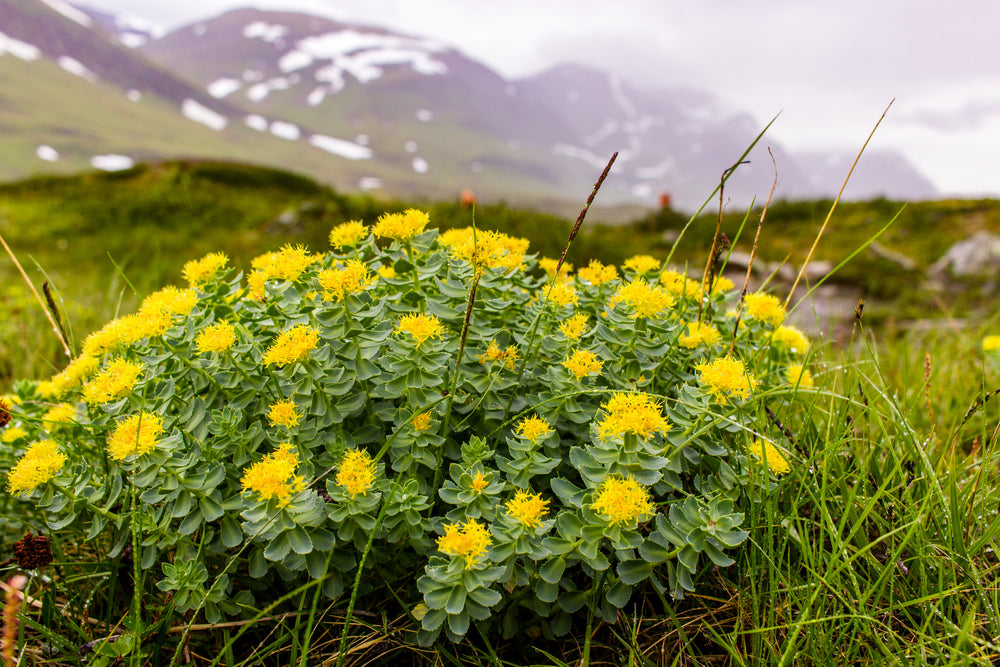
Rhodiola (Rhodiola rosea), also known as golden root, rose root or Arctic root, is a flowering plant that grows in cold, high-altitude regions of Europe and Asia. Its root has a long history of traditional use in Scandinavia, Russia and other northern cultures to support stamina, work capacity and resilience in harsh conditions [1].
The root's best-known compounds are rosavins and salidroside, which researchers associate with its adaptogenic effects [1]. Quality extracts are often standardized to these compounds.
What the Research Says

Energy and Fatigue
This is rhodiola's best-known use. A systematic review of 11 controlled trials found that some studies reported benefits for physical performance and mental fatigue, while others didn't, and that many trials had design or reporting flaws [2]. In other words, the evidence is promising but not conclusive. In the European Union, rhodiola is registered as a traditional herbal medicine for the temporary relief of stress symptoms such as fatigue and a sense of weakness, based on its long history of use [3].
Stress Resilience
Rhodiola is classed as an adaptogen, meaning it's traditionally used to help the body adapt to physical and mental stress. Reviews of its pharmacology describe effects on the body's stress-response systems, though human research is still developing [1].
Mental Focus
Several of the trials in the systematic review looked at mental fatigue and concentration, and a few found improvements [2]. Many people find it helpful for staying sharp during demanding stretches, but more well-designed studies are needed.
Who Is Rhodiola Best For?
People who want steady energy without the jitters and are tired of relying on caffeine.
People going through demanding periods at work, in training or in life.
People rebuilding after being sick or run down who want gentle energy support while they get back to normal.
Rhodiola vs. Ashwagandha
Both are adaptogens, but they're often used differently. Rhodiola is typically described as more uplifting and energizing, so it's usually taken in the morning. Ashwagandha is typically described as more calming and grounding, so many people take it in the evening. Some people use both at different times of day. Our Adrenal Calm & Restore is a liposomal ashwagandha tonic with ginger if you're looking for the calming side.† For more on ashwagandha, see our guide to shilajit and ashwagandha.
How We Use Rhodiola
Rhodiola is one of five dual-extracted herbs in our Mold & Myco Clear Tonic, alongside maca root and eleuthero for steady energy and focus, astragalus for healthy immune function, and grapeseed for antioxidant protection. It's designed as herbal support for life after mold exposure, once the source has been addressed.† Many people pair it with our Fulvic Acid & Trace Ocean Minerals as the binder in their plan.† For the bigger picture, see our guide to mold exposure and detox support.
What Customers Report
As of October 2026, our Mold & Myco Clear Tonic has 114 customer reviews averaging 4.77 out of 5: 100 five-star, 8 four-star, 2 three-star, 2 two-star and 2 one-star. About 1 in 8 reviewers mention energy or fatigue, and a similar share mention focus or mental clarity. Not every comment was positive: a few reviewers noticed no change after a couple of weeks, and two didn't like the alcohol taste of the tincture. Results vary.
How to Take Rhodiola

Take it in the morning or early afternoon. Because it's energizing, taking it late in the day can interfere with sleep for some people.
Follow the label and start low. See how you respond before increasing.
Look for a quality extract. Choose products that are third-party tested and clearly labeled.
Keep the foundations in place. Sleep, whole foods, hydration and movement matter more than any herb.
Side Effects and Safety
Rhodiola is generally well tolerated. Possible side effects include trouble sleeping if taken late, feeling restless or overstimulated, and mild digestive upset. It may interact with some medications, including antidepressants, blood pressure medications and diabetes medications, so talk with your healthcare provider before using it if you take any prescription medication. Avoid it during pregnancy and breastfeeding, since safety hasn't been established.
The Bottom Line
Rhodiola is an adaptogen with a long traditional history for energy and stress resilience, and promising (if mixed) research behind it. It's a great fit for people who want steady energy without the jitters, especially when they're rebuilding after a hard stretch. Take it in the morning, start low, and keep your foundations strong.
References
Panossian A, Wikman G, Sarris J. Rosenroot (Rhodiola rosea): traditional use, chemical composition, pharmacology and clinical efficacy. Phytomedicine. 2010;17(7):481–493. PMID 20378318
Ishaque S, et al. Rhodiola rosea for physical and mental fatigue: a systematic review. BMC Complement Altern Med. 2012;12:70. PMC3541197
European Medicines Agency. Assessment report on Rhodiola rosea L., rhizoma et radix. ema.europa.eu
