

Quick Answer
Genetics is the biggest factor in when your hair turns gray, and no supplement can reverse genetic graying. But some early graying is linked to things you can influence: low vitamin B12, folate, vitamin D, ferritin or copper, and oxidative stress in the hair follicle. Testing your nutrient levels, supporting healthy methylation, keeping your minerals in balance and reducing sources of oxidative stress may help slow the process for some people.
A Nutritionist's Take
"I'm not a gray hair expert. I actually have some myself, and a lot of it is genetic. But I have the MTHFR mutation, and once I started taking the active forms of B12 and folate and got my levels right, my graying slowed down a lot. Learning about methylation, oxidative stress and mineral status made a real difference for me."
— Jordan Dorn, Certified Nutritionist
Let me start with some honesty: I'm not an expert in gray hair, and I have some myself, especially around my temples and in my beard. A lot of graying is simply genetic, and no supplement is going to change your genes.
But I've also seen in my own life that some of the pace of graying is in your control. In this article, I'll share what helped me, what the research says about nutrition and early graying, and how to approach it realistically.
In this article 7 sections
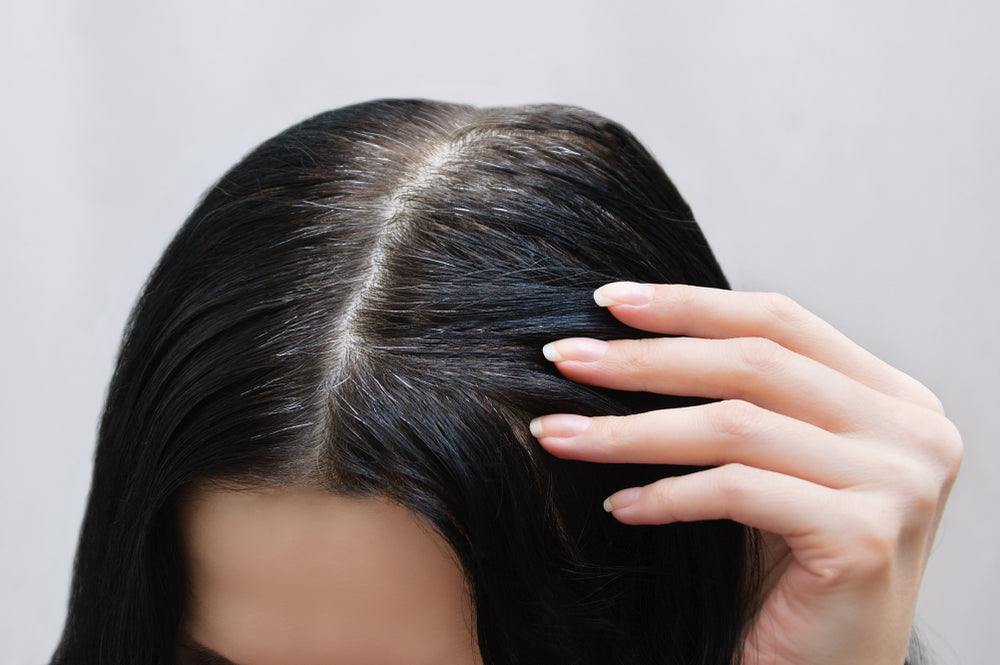
Why Hair Turns Gray

Hair gets its color from melanin, made by pigment cells in the hair follicle. Over time, those cells make less pigment, and hair grows in gray or white. The main drivers of when that happens are [1]:
Genetics. Family history is the strongest predictor of when you'll go gray.
Nutrient status. Low vitamin B12, folate (B9), biotin, vitamin D, ferritin (iron stores) and copper have all been linked to premature graying.
Oxidative stress. An imbalance between free radicals and antioxidants may play a role when graying happens early.
Other factors. Smoking, thyroid problems and some autoimmune conditions are also linked to earlier graying.
If your graying is genetic or simply age-related, it can't be reversed. If a deficiency or medical issue is contributing, addressing it may help slow things down [1].
What Helped Me: Methylation, B12 and Folate
Methylation is a process your body uses constantly, including to make and repair DNA, and it depends heavily on vitamin B12 and folate. Some people carry common variants in the MTHFR gene, which can make it harder to convert folate into its active form.
I'm one of them. Once I learned that, I switched to active forms: methylfolate (5-MTHF) for folate, and hydroxocobalamin and adenosylcobalamin for B12. When I got my levels where they needed to be, my graying slowed down a lot. That's my personal experience, not a guarantee, but it's why I think testing your B12 and folate status is a smart first step.
If you suspect a methylation issue, work with a practitioner who can test your levels and recommend the right forms and amounts for you. Our Stress B Complex with Vitamin C provides a full spectrum of B vitamins, including B12, alongside vitamin C.†
Oxidative Stress and Your Hair

Research has found that graying hair follicles accumulate hydrogen peroxide, a natural byproduct of metabolism. In graying hair, levels of catalase, the enzyme that normally breaks hydrogen peroxide down, were reduced. The built-up peroxide interferes with the enzyme that makes melanin, essentially bleaching hair from the inside [2].
That's why I pay attention to oxidative stress. There's a test for a marker called 8-OHdG, which reflects oxidative damage to DNA. It can show whether something in your life is driving more oxidative stress than your body can handle. Lifestyle is huge here:
Don't smoke, and limit exposure to pollution and chemicals where you can.
Eat plenty of colorful, antioxidant-rich foods.
Manage stress and prioritize sleep.
Be mindful of harsh hair dyes and products.
Dial In Your Minerals
Copper is needed to make melanin, and low copper has been linked to early graying [1]. But minerals work as a team. High-dose zinc taken long term can lower copper, so more isn't always better. I prefer getting minerals in balance, from whole foods and whole-food sources, rather than mega-dosing one at a time.
Our Fulvic Acid & Trace Ocean Minerals provides a broad spectrum of 70+ trace minerals, and our Guava Leaf Zinc + Amla Vitamin C offers plant-based zinc from a whole-food source.† See our guides to food sources of copper and the calcium, magnesium and zinc ratio.
A Realistic Plan

Accept the genetic part. Some graying is simply in your DNA.
Test, don't guess. Ask your doctor about B12, folate, vitamin D, ferritin, thyroid and copper levels, and consider methylation and oxidative stress testing with a practitioner.
Correct what's low, using active nutrient forms when they make sense for you.
Reduce oxidative stress with diet, sleep, stress management and fewer toxic exposures.
Keep minerals in balance rather than mega-dosing one nutrient.
For more on hair health, see our guides to hair loss causes and prevention and ingredients that support a healthy scalp.
When to See a Doctor
See a doctor if your hair is graying very suddenly or very early, especially alongside fatigue, numbness or tingling, weight changes or other symptoms. Early graying can sometimes be a sign of a thyroid issue, an autoimmune condition or a deficiency that needs proper testing.
The Bottom Line
No supplement can reverse genetic gray hair. But getting your B12 and folate status right, supporting methylation, reducing oxidative stress and keeping your minerals in balance may help slow early graying, and it's what made the biggest difference for me. Start by testing, and build from there.
References
Medical News Today. Why does hair turn gray or white? (Medically reviewed by Amanda Caldwell, MSN, APRN-C.) medicalnewstoday.com
Wood JM, et al. Senile hair graying: H2O2-mediated oxidative stress affects human hair color by blunting methionine sulfoxide repair. FASEB J. 2009. Summary at sciencedaily.com
